


- March 4, 2026
- Berrin Tezcan
Medical room rental compliance describes the legal, licensing, and physical standards a healthcare practitioner must meet before treating patients in a rented clinical space. At Medical Rooms London, our CQC-registered facilities in Belgravia and Dulwich simplify this process – practitioners work within an already-compliant environment with practising privileges support. These requirements span UK GDPR data protection obligations, regulatory body registration rules, and Care Quality Commission standards.
Getting this wrong can end a career before it properly begins.
In this guide, we’ll cover the regulations governing medical room rentals in the UK, the licences and insurance you need, how to set up a physically compliant space, and the step-by-step verification process every practitioner should follow. I’ll share practical thresholds and real-world observations from years of helping independent practitioners navigate exactly this challenge.
What Regulations Govern Medical Room Rentals in the UK?
Medical room rental compliance in the UK is governed by UK GDPR data protection standards, regulatory body registration rules from the GMC, NMC, or HCPC depending on your profession, and Care Quality Commission registration requirements for regulated activities, with practitioners remaining fully responsible regardless of who owns the space.
The data protection layer is the most consistent piece of the puzzle. UK GDPR, overseen by the Information Commissioner’s Office, sets baseline privacy and data security requirements that follow a practitioner regardless of where they practise. Renting a room from someone else does not transfer that responsibility. It stays with you.
Regulatory body obligations are where things get genuinely complicated. The GMC, NMC, and HCPC each define acceptable practice environments differently, and some bodies require practitioners to notify them of any address where regulated clinical services are provided, even on a sessional basis. A GP colleague of mine was caught off guard when adding a single rented morning slot triggered a requirement to update her registered practice address with NHS England.
At Medical Rooms London, practitioners work under practising privileges provided by Grosvenor Gardens Healthcare (GGH), meaning the CQC compliance infrastructure is already established. This removes the burden of establishing individual CQC registration for the premises.
The HSE’s guidance on biological agents and sharps is also worth reviewing early if any procedures in the rented space carry blood or exposure risk.
Which Licences and Insurance Do You Need to Rent a Medical Room for Patient Care?
Practitioners renting a medical room must hold current registration with their relevant UK regulatory body, carry professional indemnity insurance at a minimum of £1 million per claim, and obtain CQC registration if the activities performed constitute a regulated activity under the Health and Social Care Act 2008.
Your individual registration is the non-negotiable starting point. Doctor, nurse, physiotherapist, or counsellor, the registration must be active, in good standing, and issued by the appropriate UK body for your profession. Practising with lapsed registration, even briefly, creates serious legal and professional exposure.
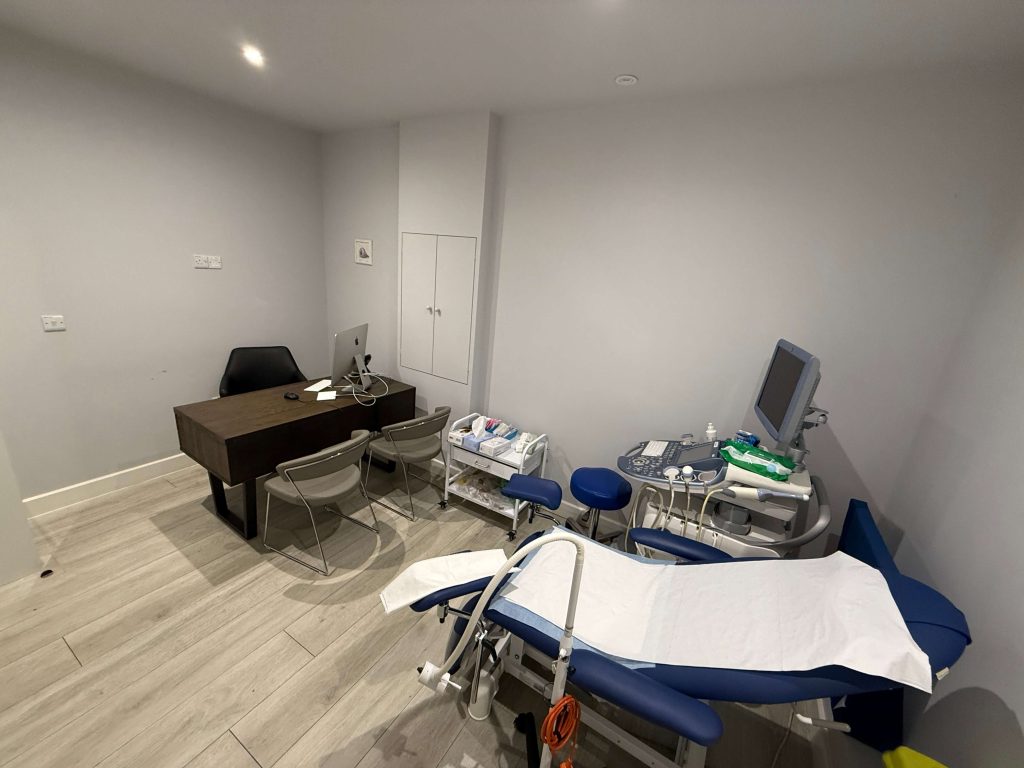
Beyond personal registration, certain activities trigger CQC registration requirements. Treatments involving anaesthesia, minor surgical procedures, and diagnostic imaging commonly require formal CQC registration of the service itself, not just the practitioner delivering it. The CQC’s provider registration guidance sets out clearly when registration becomes legally required.
Professional indemnity tends to be the item landlords check most rigorously. Most medical suite landlords require a certificate of indemnity cover before handing over keys, and for good reason. If something goes wrong in their space, they need certainty about who bears liability.
Key Compliance Thresholds for Medical Room Rentals
| Requirement | Minimum Standard | Applies To |
| Regulatory body registration | Active, in good standing (GMC/NMC/HCPC) | All regulated practitioners |
| Professional indemnity insurance | £1 million per claim | Most clinical disciplines |
| CQC registration | Required for regulated activities (or work within CQC-registered facility) | Surgical or diagnostic services |
| Controlled drug authority | Home Office licence, current | Prescribing providers |
These four requirements represent the core compliance floor before seeing your first patient. Indemnity and registration gaps account for the vast majority of regulatory actions taken against practitioners working in rented clinical spaces.
How Do You Set Up a Compliant Patient Care Space in a Rented Room?
A compliant medical rental space in the UK requires a minimum examination room size of approximately 11 square metres, a lockable or encrypted records system meeting UK GDPR requirements, handwashing facilities within 6 metres of the treatment area, and adequate visual and audio privacy from adjacent spaces under ICO guidance.
The physical requirements catch a surprising number of practitioners off guard. At Medical Rooms London’s Belgravia and Dulwich locations, all rooms are pre-configured to meet these standards, including compliant handwashing facilities and appropriate room sizing. A stylish room in a shared wellness centre can look clinical without actually meeting the relevant standards. I once walked through a rented suite in a converted Victorian terrace that had no compliant handwashing sink within the required proximity, which would have made it unsuitable for any hands-on clinical work regardless of how well equipped it appeared.
UK GDPR physical safeguards extend directly into the rental environment. Conversations audible through thin walls, screens visible from doorways, and unsecured paper records on desks all create compliance risk under data protection law. The ICO’s guidance on data protection by design and default covers the physical safeguard principles clearly.
One small but frequently missed item: UK GDPR requires practitioners to make their privacy notice accessible to patients at the point of care. A printed notice displayed in the room handles this simply. Easy to overlook, costly to miss during an ICO audit.
What Steps Are Involved in Verifying Medical Room Rental Compliance Before Seeing Patients?
Verifying medical room rental compliance requires practitioners to confirm regulatory body registration, CQC obligations, indemnity cover, UK GDPR physical safeguards, and lease terms at least 30 to 60 days before the first patient appointment to allow sufficient time for processing and corrections.
This checklist outlines the steps for verifying medical room rental compliance before seeing patients.
- Confirm regulatory body registration (GMC, NMC, or HCPC) is active and reflects any new practice address requirements.
- Verify whether the clinical activities planned in the rented space require CQC registration as a regulated activity.
- Obtain professional indemnity insurance with a minimum of £1 million per claim and confirm cover includes rented or sessional locations.
- Review the rental lease for permitted use clauses that explicitly allow clinical patient care on the premises.
- Assess the room for UK GDPR physical safeguards including adequate wall soundproofing and screen privacy from corridors.
- Confirm handwashing facilities are within 6 metres of the primary treatment area.
- Set up a compliant patient records system with encrypted digital storage or a securely locked filing area.
- Display a UK GDPR-compliant privacy notice in any patient-facing area of the rented space.
- Notify NHS England or your ICB of any new practice address if NHS services are being delivered from the rented space.
- Confirm Home Office controlled drug authority reflects the rental location address before prescribing Schedule 2 or 3 controlled drugs.
Allow the full 30 to 60 days. Registration address updates and indemnity applications take longer than most practitioners expect, and rushing this stage is exactly how regulatory problems begin.
How Does Medical Room Rental Compliance Protect Your Practice Long-Term?
Medical room rental compliance is far more manageable once you treat it as a structured process rather than an ambiguous obstacle. Start with your regulatory body, confirm your registration covers the specific address, then work outward through indemnity, CQC obligations, and UK GDPR requirements.
The practitioners who struggle most are those who assume the landlord or shared clinic operator has handled compliance on their behalf.
That assumption is expensive. Legal and professional responsibility for a clinical space rests with the practitioner providing care inside it, regardless of who holds the lease.
Give yourself 30 to 60 days before your first patient appointment. It sounds like a generous runway, but it genuinely isn’t when registration queries, indemnity paperwork, and CQC checks stack up simultaneously. Treating compliance as an ongoing practice habit, rather than a one-time hurdle, keeps a rented clinical space running smoothly for years.
Three actionable takeaways:
- Verify your regulatory body registration covers the rental address requirements before any patient contact.
- Confirm CQC obligations, indemnity minimums, and UK GDPR physical safeguards as separate, distinct steps.
- Begin the compliance verification process 30 to 60 days before your planned first patient appointment.
Frequently Asked Questions: Medical Room Rental Compliance
What is medical room rental compliance in the UK?
Medical room rental compliance refers to the legal, licensing, and physical standards a practitioner must meet before treating patients in a rented clinical space. Requirements in the UK span UK GDPR obligations, regulatory body registration rules, and Care Quality Commission standards.
Do I need a separate licence to practise in a rented medical room?
Practitioners do not typically need a separate personal licence for a rented room, but registration with the relevant body (GMC, NMC, or HCPC) must be active and current at the rented address. Some regulatory bodies also require practitioners to update their registered practice address when adding sessional or rented locations to their working arrangements.
Does the building owner need CQC registration for medical use?
The building owner does not typically need personal CQC registration, but the service being delivered from the space may require CQC registration depending on the regulated activities involved. Surgical procedures, diagnostic imaging, and certain treatment activities commonly trigger CQC registration requirements for the service, not merely the practitioner.
What indemnity insurance is required to rent a medical room in the UK?
Practitioners renting a medical room in the UK typically need professional indemnity insurance with a minimum of £1 million per claim. Many landlords also require public liability cover and will request a current certificate of insurance before the rental agreement is signed.
Does UK GDPR apply when I see patients in a rented room?
UK GDPR applies to all locations where a data controller processes patient personal data, including rented and shared clinical spaces. Practitioners remain fully responsible for physical safeguards, privacy notices, and secure records handling regardless of who owns or manages the rental premises.
Can a rented room be used for remote or telehealth consultations?
Practitioners can use a rented room for remote consultations provided the space meets UK GDPR requirements for both visual and audio privacy from other occupants. The room does not need to meet the same physical examination standards, but confidentiality safeguards remain fully applicable under data protection law.
What should I look for in a medical room rental agreement?
Practitioners should check the permitted use clause to confirm that clinical patient care is explicitly allowed, and review indemnity terms that clarify liability responsibilities between the parties. Insurance requirements, notice periods, and any restrictions on patient-facing signage are also worth examining carefully before signing.
How far in advance should I start the compliance verification process?
Practitioners should begin the compliance verification process at least 30 to 60 days before the first planned patient appointment. This timeline allows sufficient room for registration address updates, indemnity applications, and any required CQC notifications to be completed without time pressure.
Leave feedback about this